Why Every Community Needs a Great Pizza Restaurant
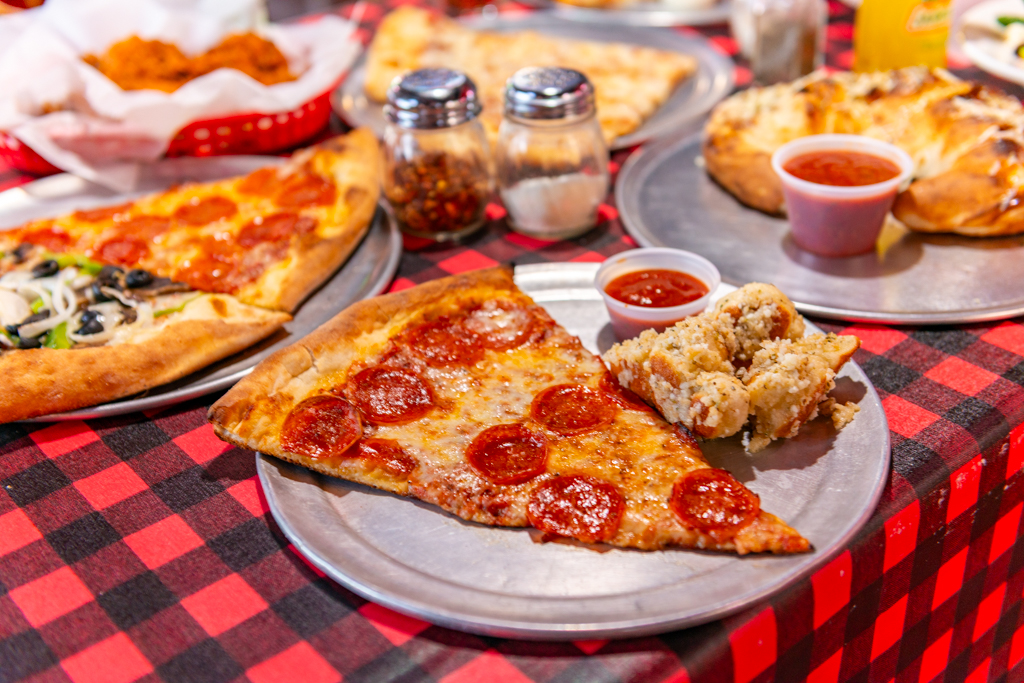

A great pizza restaurant does more than feed people. It becomes part of the local rhythm. It is where little league teams gather after a game, where new neighbors get their first casual introduction to town, where high school students learn how to split a bill, and where exhausted parents can walk in on a Friday night and know everyone will leave happier than they arrived.
That kind of place is harder to build than it looks.
From the outside, pizza can seem simple. Dough, sauce, cheese, heat. Yet anyone who has spent time in hospitality knows a dependable pizza restaurant is one of the most useful institutions a community can have. It sits at the crossroads of convenience and ritual. It can serve a family of five, a table of twelve, a solo diner grabbing a slice, and a fundraiser crowd that just emptied a gymnasium, all within the same evening. Few businesses can meet so many different needs without feeling exclusive, formal, or intimidating.
When a town has a truly good pizza restaurant, the benefits spread far beyond the dining room.
A place everyone understands
Every community needs spaces that lower social friction. A public library does that in one way. A park does it in another. A pizza restaurant does it through familiarity.
Almost everyone knows how to use the place. You do not need a dress code, advance knowledge of the menu, or a special occasion. The format is forgiving. If you are short on time, you can pick up dinner. If you want to linger, you can. If your budget is tight, pizza still works better than most restaurant meals because it can be shared. If you are feeding children, grandparents, and one picky eater who only wants plain cheese, there is usually a path that keeps the peace.
That ease matters more than people often admit. Communities are held together by repeated low-stakes encounters. Not every relationship begins at a civic meeting or a formal event. Sometimes it begins when two parents waiting on takeout discover their kids are in the same class. Sometimes it starts with a quick nod to the couple at the next table, then turns into a ten-minute conversation about road construction, school enrollment, or the new bakery down the street.
A good pizza restaurant makes those moments common. It gives people a neutral ground that feels local without feeling exclusive.
The rare business that serves both celebration and routine
Many restaurants are built for one mode only. Some are purely special-occasion destinations. Others are strictly utility, places people visit only because they need calories quickly. Pizza occupies a rare middle ground.
It works on ordinary Tuesdays, but it also works after graduations, recitals, birthdays, and championship games. That flexibility is one reason pizza restaurants become woven into memory. Ask people about their hometown and there is a decent chance they can tell you exactly where the team went after games, where families ordered on snow days, or which booth was always occupied by the same retired men on weekday afternoons.
Those habits become part of a place’s identity. It is not really about mozzarella and pepperoni. It is about repetition with emotional weight attached.
I have seen neighborhoods where a single well-run pizza restaurant became the default answer to half the community’s informal needs. Need to feed volunteers after a cleanup? Call the pizza place. Need a simple venue for a youth team dinner? The pizza place. Need a reliable option when your relatives arrive late and everyone is tired? Again, the pizza place.
That kind of versatility makes a town more functional. It reduces the effort required to gather people together, and communities thrive when gathering is easy.
Affordability is not a small virtue
People often talk about restaurants in terms of cuisine, prestige, or trendiness. Those things have their place, but affordability deserves more respect than it gets.
A great pizza restaurant gives people access to hospitality without making them https://rafaelbfbx288.halcyonledger.com/posts/how-a-pizza-restaurant-keeps-its-recipes-consistent perform wealth. For families watching expenses, that matters. For teenagers with part-time jobs, it matters. For retirees who still want a night out, it matters. For coaches buying food for a team or a church group feeding volunteers, it matters a great deal.
The math is straightforward. A meal at many full-service restaurants becomes expensive quickly, especially once drinks, sides, and tips enter the picture. Pizza is one of the few restaurant formats where the shared structure naturally controls cost. Even if prices rise, as they have nearly everywhere, a pizza restaurant often remains one of the last places where a group can eat together without the bill becoming stressful.
That affordability has social consequences. It keeps community life more open. If the only gathering places in a town are expensive, participation narrows. The people who can afford to show up become the people who shape the social atmosphere. A pizza restaurant, at its best, resists that narrowing. It says this table is for everybody.
Of course, affordability brings pressure on the operator. Margins in food service are tight. Cheese prices fluctuate. Labor is expensive. Rent can be punishing. The best pizza restaurant has to manage those realities without cutting corners so deeply that the food or service becomes joyless. That balance is one reason truly great places deserve more appreciation than they get.
Local ownership changes the equation
A chain can provide consistency, and there are communities where a national brand fills an important gap. But when people talk fondly about a pizza restaurant, they are usually talking about a place with local personality.
Local ownership changes the emotional contract. The owner sponsors the youth soccer banner, knows which family just welcomed a new baby, and remembers who likes their pie extra well done. Staff members often stay long enough to become recognizable faces rather than anonymous labor passing through. That continuity builds trust, and trust is one of the most valuable assets any neighborhood business can create.
There is also a practical effect. Local operators tend to adapt faster to what a community actually wants. If nearby factories run late shifts, the smart pizza restaurant stays open later. If the town has a large Catholic population and Friday traffic spikes during Lent, the menu reflects that. If local farms offer great seasonal produce, special pies appear at the right time of year. The restaurant becomes not just physically located in the community, but responsive to it.
That responsiveness is difficult to fake. Customers can tell the difference between a place that listens and a place that simply executes a standard model.
The workforce training ground nobody talks about enough
For many people, a pizza restaurant is their first job. That is not a minor detail. It means the restaurant helps shape local work habits, confidence, and expectations long before people move into other industries.
A teenager who answers phones on a busy Friday learns how to stay calm while several people need something at once. A delivery driver learns the geography of the town, time management, and customer interaction. A line cook learns pace, sanitation, teamwork, and what happens when one person stops communicating in the middle of a rush. A shift lead discovers that being in charge is less about authority than about clarity and steadiness.
These are transferable skills. The restaurant industry has always been one of the most accessible entry points into employment, and pizza operations are especially strong training environments because the workflow is visible and fast. You can feel the consequences of good systems almost immediately. When prep is done well, the night hums. When it is not, everyone suffers.
Communities benefit when local businesses give young and early-career workers a place to develop discipline in a real setting. Not every lesson needs to come from a classroom or a seminar. Sometimes it comes from learning how to stretch dough, box six orders correctly, and apologize sincerely when a delivery is late because the storm knocked out traffic lights across town.
A great pizza restaurant strengthens local commerce
Restaurant discussions often stop at food quality, but the economic role is broader. A strong pizza restaurant helps neighboring businesses in quiet ways.
If it anchors a small commercial strip, it can increase evening foot traffic. Families picking up dinner may also stop for ice cream, browse a bookstore, or run into the pharmacy. Workers from nearby offices may turn into lunch regulars. Local breweries sometimes benefit from pizza partnerships because the pairing is natural and the logistics are simple. Schools, churches, and nonprofits often rely on these restaurants for bulk orders, event nights, and donation programs.
The supply side matters too. A locally rooted pizza restaurant often buys from regional distributors, hires local tradespeople for maintenance, and contracts with nearby printers, sign shops, and laundries. When the operation is healthy, money circulates.
Not every independent restaurant can or should attempt to be a civic engine. Some are too small. Some are deliberately specialized. But pizza, because of its broad demand and repeat business, is unusually well positioned to become one. A busy and beloved pizza restaurant can be one of the most economically useful storefronts on a main street.
Reliability counts more than novelty
Food media tends to reward spectacle. Extra-tall crusts, bizarre toppings, viral visuals, limited drops. There is room for creativity, and some inventive pizzas are genuinely excellent. Still, novelty is not what makes a restaurant matter to a community over ten or twenty years.
Reliability does.
People need to know that if they order on a difficult day, the food will be good. If they bring their parents, the room will be clean and comfortable. If they show up after a school event with a crowd, the staff will know how to handle it. If a team places a giant order at 4:30 for a 6:00 pickup, someone on the other end of the phone will ask the right questions and get it done.
That sort of competence is deeply underrated. It does not go viral, but it builds loyalty that no marketing campaign can buy.
The best pizza restaurant in a town is often not the flashiest. It may not even be the one food obsessives argue about online. Often it is the place that sends out a hundred dinners on a chaotic Friday and still manages to make each customer feel looked after. The crust is consistent. The sauce tastes like itself, not like a committee built it. The order is right. The wait estimate is honest. The staff does not treat regulars as interruptions.
Those are not glamorous qualities. They are foundational ones.
What makes a pizza restaurant truly great
People differ on whether the ideal slice should be foldable, chewy, crisp, blistered, thin, thick, square, round, coal-fired, deck-oven baked, or pan-crisped. Those arguments are part of the fun. Yet the greatness of a community pizza restaurant rests on more than style.
A place earns lasting status when it combines several hard-to-balance strengths:
- Food that is distinct and dependable.
- Service that stays warm under pressure.
- Pricing that allows repeat visits.
- A room or pickup experience that feels welcoming.
- Owners and staff who understand the neighborhood they serve.
Miss one or two of those badly enough, and the restaurant may still survive, but it will not become essential.
For example, a place can make outstanding artisan pies and still fail as a community anchor if it takes ninety minutes to produce dinner, offers no practical family options, and treats every substitution like a personal insult. On the other hand, a restaurant with average pizza but extraordinary hospitality and consistency can become beloved far beyond what its recipes alone would predict. The strongest operators know that quality includes timing, tone, cleanliness, accuracy, and generosity.
There is also a judgment component. A great pizza restaurant knows what it is. If it serves New York-style slices, it does not need to imitate Neapolitan trends every six months. If it is built around family takeout, it should not overcomplicate its menu trying to impress the wrong audience. Clarity helps staff execute and helps customers trust what they are ordering.
The social architecture of the dining room
The physical setup of a pizza restaurant matters more than many owners realize. Booths, counter seating, family tables, visible ovens, a waiting area that does not trap people by the door, enough room for winter coats and strollers, sensible acoustics, durable surfaces that still feel cared for, all of these details shape whether the place becomes usable for real life.
Pizza restaurants often succeed because they are forgiving spaces. A child can be a little loud. A coach can walk in with ten players. Someone in work boots can sit next to someone celebrating a birthday without either person feeling out of place. That is harder to achieve than it sounds. Too casual, and the room feels neglected. Too polished, and people become self-conscious.
The best rooms strike a balance between energy and ease. They feel alive, but not chaotic. You can hear yourself talk. Staff can move quickly. The wait for a table does not feel punishing. Even the smell matters. A room that carries the scent of baking dough, tomato, garlic, and toasted cheese tells people they are exactly where they meant to be.
Design choices also affect who feels welcome. If pickup is efficient, busy parents come back. If there is enough seating flexibility, seniors with mobility concerns can dine comfortably. If lighting is thoughtful rather than harsh, the place feels suitable for everything from lunch meetings to family dinners. Good operators notice these things because they watch how actual people use the space, not how an architect imagined they might.
When the pizza place shows up for the town
Communities remember businesses that participate.
A restaurant that donates pies to a school fundraiser, feeds volunteers after a storm, or quietly sends food to a grieving family becomes more than a commercial enterprise. It becomes part of the support system. These gestures are not always large, and they do not need to be performative. In fact, the most meaningful contributions often happen without social media fanfare.
I have seen small-town pizza shops become informal crisis infrastructure. During power outages, they are one of the few places able to produce hot food at scale. During youth tournaments, they absorb waves of hungry families that local kitchens elsewhere cannot handle. During funerals, they provide practical nourishment for people too tired to think about cooking. During holidays, they offer relief to workers on shift and households that do not have the time or energy to prepare a full meal.
That reliability under pressure builds a kind of civic credibility. People begin to think of the pizza restaurant not just as a place to eat, but as a place that can be counted on.
Not every town needs the same kind of pizza place
It is worth acknowledging an important nuance. The ideal pizza restaurant depends on the community itself.
A dense urban neighborhood may thrive on a slice shop with fast turnover, late hours, and strong foot traffic. A suburban family area may need a larger dining room, easy parking, online ordering that actually works, and combo deals that simplify feeding groups. A college town may support creative toppings and midnight volume. A rural town may need a single restaurant flexible enough to handle dine-in, takeout, delivery, and event catering with a relatively small staff.
The fundamentals remain, but execution varies. Operators who succeed for the long term pay attention to the specific habits around them. They do not copy a model from somewhere else and hope the neighborhood conforms.
Here are a few traits that tend to signal a pizza restaurant understands its market:
- It respects local time patterns, including school, work, and event schedules.
- It offers portion sizes and pricing that match the area’s household realities.
- It handles both regular traffic and sudden surges without collapsing.
- It communicates clearly, especially around waits, mistakes, and special orders.
- It evolves carefully without abandoning what made people care in the first place.
That last point deserves emphasis. Communities want improvement, but they do not want a beloved restaurant to become unrecognizable. Updating equipment, streamlining online ordering, or adding better salads is one thing. Replacing the familiar sauce, cutting portions, raising prices sharply, and redesigning the room into something colder is another. Good stewardship means knowing which parts of the experience are negotiable and which are the soul of the business.
Why this matters more than it seems
It is easy to dismiss a pizza restaurant as a simple convenience, one more food option among many. But local life is built from places that work, places people trust, and places where they can be around one another without much ceremony.
That is what a great pizza restaurant offers.
It feeds people across age, income, and background. It creates first jobs and lasting memories. It supports school events, busy households, late shifts, and ordinary weeknights when nobody has the energy for anything complicated. It helps a commercial district stay active. It gives a town one more room where people can be neighbors instead of just residents sharing a ZIP code.
A community does not become stronger through grand declarations alone. It becomes stronger through dependable institutions that meet real needs, repeatedly, with care. The best pizza restaurant does exactly that. It serves dinner, yes, but it also serves belonging. And in any healthy town, there is always room, and real need, for one place that can do both well.
RUFFRANO'S HELL'S KITCHEN PIZZA Security
385 Main St, Colorado Springs, CO 80911
(719) 390-4355
FAQ About pizza restaurant
Is there a Hell's Kitchen pizza restaurant in Security-Widefield?
Yes. Ruffrano's Hell's Kitchen Pizza has a Security-Widefield location at 385 Main St.
Where can I find pizza delivery in Security-Widefield?
Ruffrano's Security location offers online ordering. Enter your address at checkout to check delivery availability and fees.
Where can I find gluten-free pizza in Security-Widefield?
Ruffrano's menu lists a 12-inch gluten-free option. Call the Security location to confirm availability and ask about shared equipment if cross-contact is a concern.